Does urgent care do ultrasounds or MRIs?
Usually not. In the only national survey that measured it, 18.6% of urgent care centers offered ultrasound and 14.0% offered CT scans (2008 data) 1. Emergency physicians list ultrasound as something urgent care has only “sometimes” and round-the-clock CT as something it doesn’t have 2. Most clinics send you to an imaging center or a hospital, and symptoms that need a scan right away belong in the ER.
Updated November 22, 2026. Every fact links to its source below.
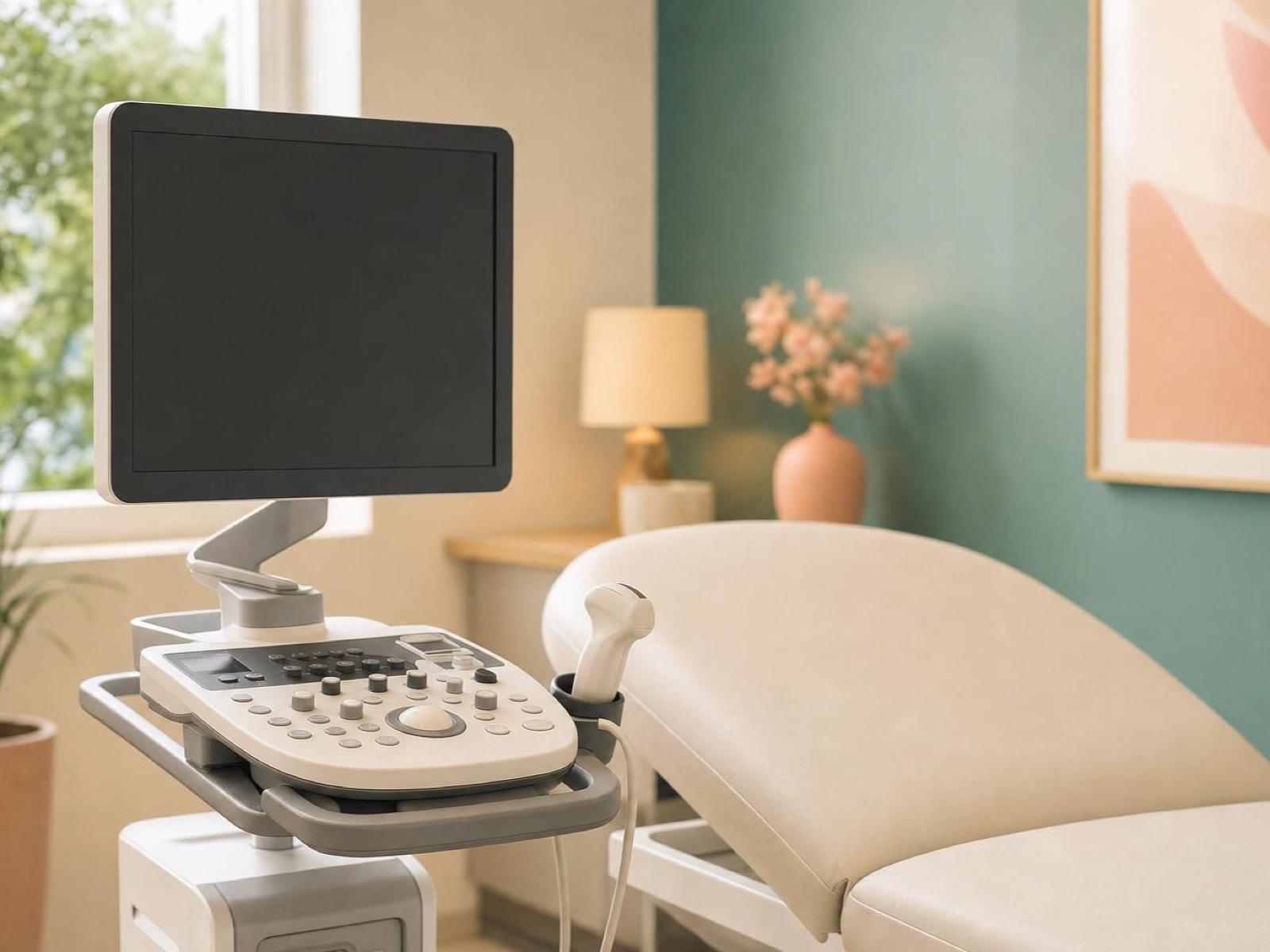
Symptoms that need a scan fast belong in the ER
Urgent care centers don’t have the full set of equipment or specialized staff found in an emergency department 3. Call 911 or go to the nearest ER for:
- Signs of a stroke. A stroke is a medical emergency, and a CT or MRI of the brain is part of finding its location and any bleeding 4
- A head injury followed by a seizure, a severe headache or stiff neck, vomiting more than once, pupils of unequal size, unusual sleepiness, or any loss of consciousness 5
- A swollen, painful leg or a known blood clot together with chest pain, trouble breathing, coughing up blood or fainting 6
- Pregnancy or possible pregnancy with fainting, feeling faint or shoulder pain, which can mean an ectopic pregnancy has ruptured 7
- Severe belly pain. Emergency physicians list high-risk abdominal pain as something urgent care is not set up for 2
If you’re not sure, go to the ER. Find the nearest ER.
What urgent care usually has instead
X-ray is the imaging most urgent care centers have 8. When federal researchers interviewed urgent care leaders, very few had CT, but most had named facilities they send patients to when a CT is needed 9. So an urgent care visit can still be a useful first step for a problem that isn’t an emergency: the provider examines you and orders the scan somewhere else.
Ultrasound
An ultrasound uses sound waves to make pictures of organs, tissues and other structures inside the body, and works best for soft tissues such as organs, glands and blood vessels 10. It is safe and uses no radiation 11.
One common use is looking for blood clots in the leg veins, known as deep vein thrombosis 12. A radiologist analyzes the images and sends a signed report to the provider who asked for the exam 11.
CT scans
A CT scan uses special X-ray equipment to make detailed pictures of the inside of the body. The scan usually takes a few minutes, though some last up to 30 13. In an emergency it can show internal injuries and bleeding quickly enough to help save lives 14, and a head CT is used to assess head injuries, severe headaches and stroke symptoms 15.
CT uses more radiation than a standard X-ray: a CT of the abdomen and pelvis is about 2.6 years of natural background radiation, compared with about 10 days for a chest X-ray 16. Tell your provider if you are or may be pregnant 13.
For suspected appendicitis, CT is often the preferred scan in adults, and ultrasound is especially useful for children and pregnant women because it uses no radiation 17.
MRI
An MRI uses magnets, radio waves and a computer, with no X-rays or other radiation. Because the magnets are powerful, metal objects or implants can interfere with the scan or be unsafe 18.
MRI shows the brain, spinal cord, nerves, muscles, ligaments and tendons much more clearly than X-rays or CT, which is why it’s often used for knee and shoulder injuries. It also costs more than X-ray or CT 19. The national urgent care survey didn’t report MRI at all 1.
Where to get a scan
Scans are done on a provider’s order. Medicare Part B, for example, covers diagnostic imaging when your provider orders it to find or treat a medical problem 20. For a non-emergency problem, a regular doctor, an urgent care provider or an online provider can examine or talk with you and order imaging at an imaging center or hospital.
Freestanding emergency rooms are different from urgent care. In Texas, a licensed freestanding ER must have CT and ultrasound immediately available on the premises 21, and emergency physicians describe freestanding emergency departments as having X-ray, ultrasound and CT on site 2.
Find urgent care near you, with hours and phone numbers. Call ahead to confirm what a clinic offers.
Ultrasound, CT and MRI at urgent care, answered.
General information, not medical advice.
Does urgent care do ultrasounds?
Does urgent care do CT scans?
Does urgent care do MRIs?
Can urgent care check for a blood clot in my leg?
Can urgent care order an ultrasound or CT somewhere else?
Do freestanding ERs have CT and ultrasound?
Related guides
Does urgent care do CT scans? · Does urgent care do X-rays? · Stomach pain: ER or urgent care? · Headache or migraine: when to go to the ER · Freestanding ER vs urgent care in Texas
More on what urgent care does
Does urgent care do X-rays? · Does urgent care do stitches? · Does urgent care do blood work? · Does urgent care do STD testing? · Urgent care for kidney stones: what it can and can’t do · Does urgent care take Medicaid? · Can urgent care prescribe antibiotics? · How to get a doctor’s note online · Can urgent care refill prescriptions? · Does urgent care do IV fluids? · Does urgent care do CT scans? · Does urgent care do EKGs? · Does urgent care do pregnancy tests? · Does urgent care do physicals? · Does urgent care take Medicare? · Does urgent care do TB tests? · Does urgent care give tetanus shots? · Can urgent care treat a concussion? · Should you go to urgent care for a dog bite? · Can you go to urgent care for asthma? · Can urgent care treat pneumonia? · Can urgent care treat hemorrhoids? · Can urgent care treat an ingrown toenail? · Does urgent care do ear wax removal? · Urgent care or the ER?
Sources
- Weinick RM, et al. Urgent care centers in the U.S.: findings from a national survey. BMC Health Services Research, 2009 (2008 data)
- American College of Emergency Physicians: Freestanding emergency departments and urgent care centers, an information paper (Nov. 2015; PDF)
- American College of Emergency Physicians: Emergency physicians help clarify the difference between emergency care and urgent care (Jan. 5, 2023)
- MedlinePlus: Stroke, reviewed Apr. 16, 2025
- MedlinePlus: Head injury, first aid, reviewed Oct. 14, 2025
- MedlinePlus: Deep vein thrombosis, reviewed Apr. 1, 2025
- MedlinePlus: Ectopic pregnancy, reviewed Mar. 17, 2026
- Urgent Care Association: 2023 Urgent Care Industry White Paper (Aug. 2023; PDF)
- U.S. HHS ASPR TRACIE: Medical surge and the role of urgent care centers (Mar. 2018; PDF)
- MedlinePlus: Ultrasound, updated Aug. 17, 2026
- RadiologyInfo.org (ACR and RSNA): General ultrasound, reviewed Sept. 23, 2024
- RadiologyInfo.org (ACR and RSNA): Venous ultrasound, reviewed July 15, 2026
- MedlinePlus: CT scans, updated Jan. 26, 2026
- RadiologyInfo.org (ACR and RSNA): Body CT, reviewed June 15, 2026
- RadiologyInfo.org (ACR and RSNA): Head CT, reviewed June 15, 2026
- RadiologyInfo.org (ACR and RSNA): Radiation dose from X-ray and CT exams, reviewed Apr. 15, 2025
- RadiologyInfo.org (ACR and RSNA): Appendicitis, reviewed Aug. 29, 2024
- MedlinePlus: MRI scans, updated June 1, 2026
- NIH National Institute of Biomedical Imaging and Bioengineering: Magnetic resonance imaging (MRI)
- Medicare.gov: Diagnostic non-laboratory tests
- Texas Administrative Code, Title 26, §509.51: Radiology (freestanding emergency medical care facilities; adopted Dec. 2023)
Last updated November 22, 2026. What a clinic offers varies by location, so call ahead. General information, not medical advice or a diagnosis. If you’re not sure whether something is an emergency, go to the ER or call 911.
This is not for emergencies.
For life-threatening symptoms, severe chest pain, trouble breathing, or immediate danger, call 911 or go to the nearest emergency department.