Does urgent care do TB tests?
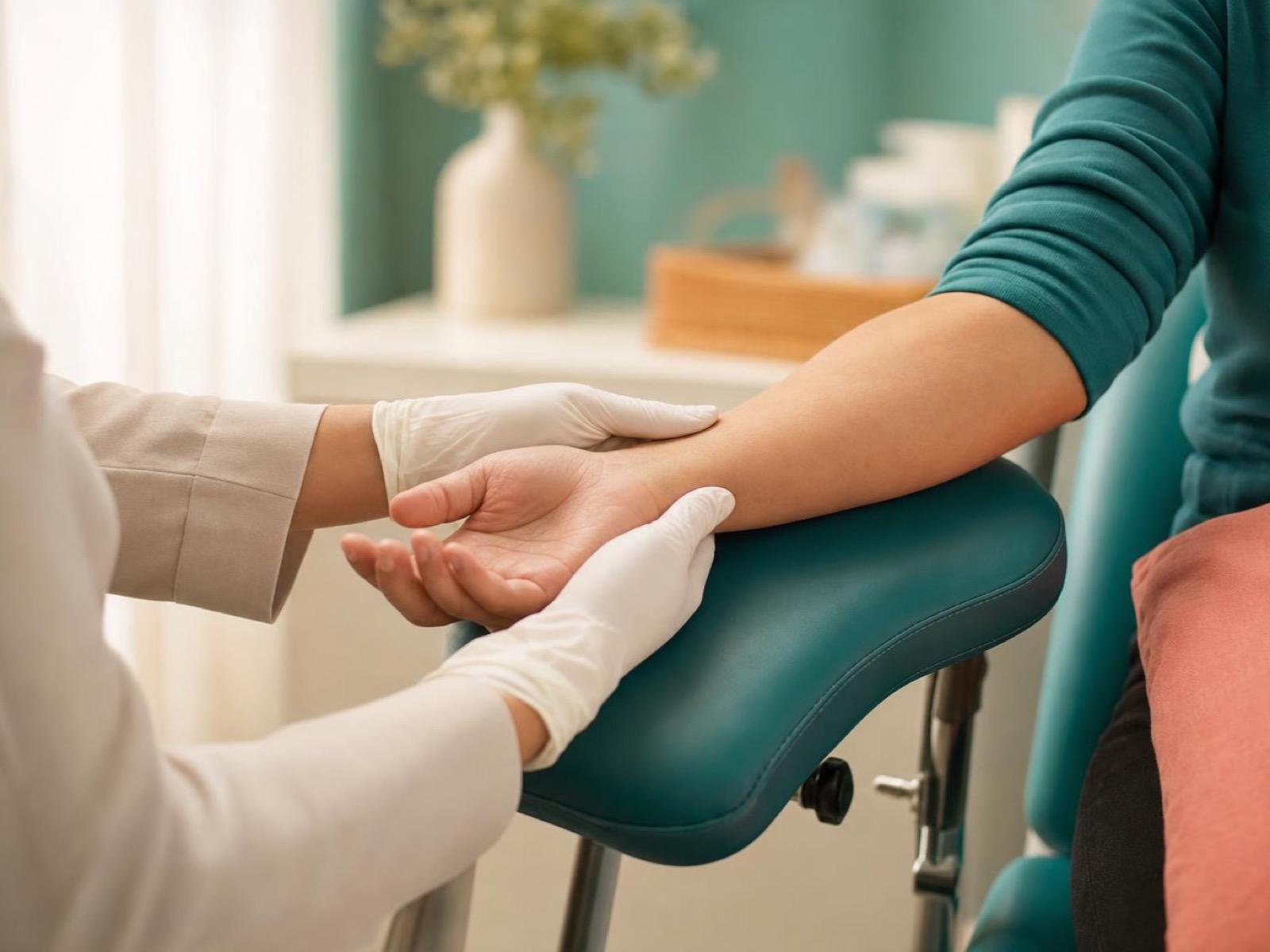
Yes. The Urgent Care Association says urgent care centers routinely offer tuberculosis (TB) testing 1. There are two kinds of test, a skin test and a blood test 2. The skin test takes two visits, two or three days apart; the blood test takes one 34. Ask the clinic which it offers, because many forms for work or school accept either.
Updated November 22, 2026. Every fact links to its source below.
When symptoms need more than a test
A TB test is a screening step for people who feel well. If you have symptoms of TB disease, such as a bad cough lasting 3 weeks or longer, chest pain, or coughing up blood, contact a provider or your health department about testing 5. Get medical help right away if you cough up blood and have 6:
- More than a few teaspoons of blood
- Chest pain
- Severe shortness of breath
- Dizziness or lightheadedness
- Fever
If you’re not sure, go to the ER. Find the nearest ER.
The skin test: two visits
The skin test requires two visits. After the test is placed, you must come back in two or three days so a trained health worker can measure any reaction 3. CDC’s guidance for clinicians gives the window as 48 to 72 hours 7. If you can’t return in that window, you’ll need the test again 3.
Plan around the clinic’s hours: a test placed on a Thursday or Friday may come due on a day the clinic is closed. If you’re screened regularly, for example as a health care worker, you may be given a two-step test, with the second test one to three weeks after the first is read 3.
The blood test: one visit
TB blood tests, also called interferon-gamma release assays or IGRAs, use a blood sample and need only one visit 4. CDC says they are preferred for people who have had the TB vaccine (BCG) and for people who would have a hard time coming back for a second appointment 4.
The BCG vaccine can cause a false-positive skin test but doesn’t affect the blood test 23. BCG isn’t generally used in the United States; it’s given to young children in countries where TB is common 3.
Who needs a TB test
TB tests generally aren’t needed for people at low risk 2. Common reasons to be tested 2:
- A job, school, travel or immigration screening requirement
- Time spent with someone who has active TB disease
- Being born in, or often traveling to, countries where TB is common
- Working where TB is more likely to spread, such as hospitals, homeless shelters, correctional facilities and nursing homes
- Symptoms of TB disease
What a positive result means
A positive test means you have TB germs in your body. It doesn’t show whether the infection is inactive or active, so your provider will order more tests, which may include a chest X-ray and a test of the phlegm you cough up 2. Most urgent care centers have X-ray on site 1.
Once you’ve tested positive, later tests may stay positive, so ask for a written record of the result 3. On the other side, a negative test can’t be the only information used to rule TB out when someone has symptoms 7.
Other places to test, and cost
You can also be tested at a health department or your regular provider’s office, and public and private health plans may cover the cost 2. Health plans list TB screening for higher-risk adults and children among preventive services 89, in line with the national task force recommendation to screen people at increased risk 10.
For health care workers, CDC recommends screening when hired. Yearly testing isn’t recommended unless there has been a known exposure or ongoing spread 11.
Find urgent care near you, with hours and phone numbers. Call ahead to confirm what a clinic offers.
TB tests at urgent care, answered.
General information, not medical advice.
Does urgent care do TB tests?
How long does a TB test take at urgent care?
What if I miss the reading for my TB skin test?
Which TB test should I get if I had the BCG vaccine?
Does a positive TB test mean I have TB?
Where can I get a free or low-cost TB test?
Related guides
Does urgent care do blood work? · Does urgent care do X-rays? · Does urgent care do physicals? · Cough: ER or urgent care? · How much is urgent care without insurance?
More on what urgent care does
Does urgent care do X-rays? · Does urgent care do ultrasounds or MRIs? · Does urgent care do stitches? · Does urgent care do blood work? · Does urgent care do STD testing? · Urgent care for kidney stones: what it can and can’t do · Does urgent care take Medicaid? · Can urgent care prescribe antibiotics? · How to get a doctor’s note online · Can urgent care refill prescriptions? · Does urgent care do IV fluids? · Does urgent care do CT scans? · Does urgent care do EKGs? · Does urgent care do pregnancy tests? · Does urgent care do physicals? · Does urgent care take Medicare? · Does urgent care give tetanus shots? · Can urgent care treat a concussion? · Should you go to urgent care for a dog bite? · Can you go to urgent care for asthma? · Can urgent care treat pneumonia? · Can urgent care treat hemorrhoids? · Can urgent care treat an ingrown toenail? · Does urgent care do ear wax removal? · Urgent care or the ER?
Sources
- Urgent Care Association: 2023 Urgent Care Industry White Paper (Aug. 2023; PDF)
- CDC: Testing for tuberculosis (June 17, 2024)
- CDC: Testing for tuberculosis, skin test (Jan. 31, 2025)
- CDC: Testing for tuberculosis, blood test (Jan. 31, 2025)
- CDC: Signs and symptoms of tuberculosis (Jan. 17, 2025)
- MedlinePlus: Coughing up blood, reviewed Apr. 1, 2025
- CDC: Clinical testing and diagnosis for tuberculosis (Apr. 17, 2025)
- HealthCare.gov: Preventive care benefits for adults
- HealthCare.gov: Preventive care benefits for children
- U.S. Preventive Services Task Force: Latent tuberculosis infection in adults, screening (May 2, 2023)
- CDC: TB screening and testing for health care personnel (reviewed Dec. 15, 2023)
Last updated November 22, 2026. What a clinic offers varies by location, so call ahead. General information, not medical advice or a diagnosis. If you’re not sure whether something is an emergency, go to the ER or call 911.
This is not for emergencies.
For life-threatening symptoms, severe chest pain, trouble breathing, or immediate danger, call 911 or go to the nearest emergency department.